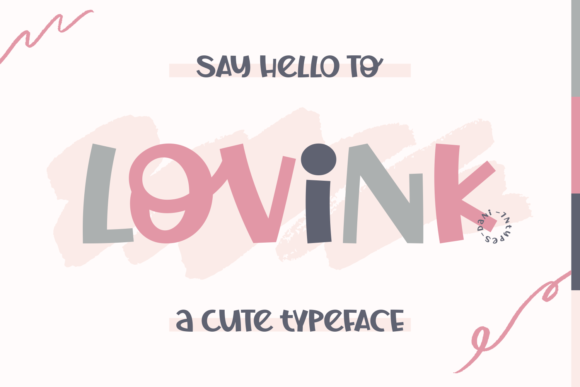
Lovink: The Whimsical Font That Elevates Creative Projects
In a digital landscape saturated with sterile, uniform typefaces, finding a visual voice that truly resonates can feel like searching for a needle in a haystack. Lovink offers a refreshing departure from the standard grid. It is a cute, whimsical, and friendly display font designed to inject personality into your work without sacrificing readability. When you need to capture attention instantly or soften the tone of a serious message, this typeface serves as a versatile tool that bridges the gap between professional polish and creative playfulness.
The value of Lovink lies not just in its aesthetic appeal, but in its ability to transform how an audience perceives your content. Whether you are a marketer crafting a campaign, an educator designing lesson plans, or a small business owner updating your branding, the right typography acts as a silent ambassador for your brand identity. By choosing Lovink, you are making a deliberate decision to prioritize human connection and emotional engagement in your communication strategy.
Why Typography Matters in Modern Communication
Typeface selection is often overlooked until it is too late. Many professionals default to safe, generic fonts because they fear standing out, yet this caution can lead to messages that blend into the background. Lovink challenges this status quo by offering a distinct character that commands attention while remaining approachable. Its whimsical nature suggests creativity and warmth, qualities that are increasingly valued in both B2B and B2C contexts.
When you integrate Lovink into your projects, you signal to your audience that you care about the details. This subtle cue builds trust. For instance, a financial advisor might use a standard serif font to convey stability, but a financial planner targeting young families could choose Lovink for their blog headers to appear more relatable and less intimidating. The font does not change the facts; it changes the feeling of receiving those facts. This psychological shift is crucial for converting casual readers into engaged followers.
The versatility of this font allows it to adapt to various mediums. From social media graphics and email newsletters to website landing pages and printed brochures, Lovink maintains its integrity across different resolutions and sizes. This consistency ensures that your brand voice remains recognizable regardless of where your audience encounters it.
Practical Applications for Professionals and Creators
One of the most significant advantages of using Lovink is the time saved on design iteration. Because the font carries such a strong inherent personality, it often reduces the need for excessive graphical elements to make a design pop. A headline set in Lovink can stand alone effectively, allowing you to focus your resources on high-quality imagery or compelling copy rather than trying to force a plain font to look interesting.
Consider the scenario of a freelance blogger launching a new series on personal development. Using a rigid, corporate font might alienate readers looking for a supportive community. In contrast, applying Lovink to the title creates an immediate sense of camaraderie. Similarly, educators creating worksheets or presentation slides for younger students will find that the friendly curves of Lovink reduce anxiety and encourage participation. The font naturally lowers the barrier to entry for complex topics by wrapping them in a welcoming visual package.
For entrepreneurs and small business owners, differentiation is key. In crowded marketplaces, your visual identity is often the first point of contact. Lovink provides a unique signature that helps your products or services stand out on shelves or in search results. It is particularly effective for brands in the lifestyle, wellness, craft, and children's sectors, where a touch of whimsy aligns perfectly with customer expectations.
Maximizing Impact Through Strategic Pairing
To get the most out of Lovink, it is essential to understand how to pair it with other design elements. While it is a display font meant for headlines and short phrases, it works best when balanced with clean, neutral body text. This contrast creates a hierarchy that guides the reader's eye and improves overall comprehension. If you use Lovink for everything, the whimsical nature may become overwhelming, diluting its impact.
A common strategy involves using Lovink for main titles, pull quotes, or call-to-action buttons, while relying on a simple sans-serif or serif font for the detailed content. This approach ensures that the "cute" aspect of the font enhances the message rather than distracting from it. For example, a non-profit organization running a fundraising campaign might use Lovink for the campaign slogan to evoke emotion, while using a legible font for the donation instructions to ensure clarity and ease of use.
This method of pairing also supports accessibility. By keeping the body text straightforward and reserving the decorative font for emphasis, you maintain a reading experience that is comfortable for all users, including those with visual impairments who rely on clear, uncluttered text. The goal is always to improve the user experience, and Lovink achieves this when used with intention.
Navigating Limitations and Fit Considerations
While Lovink is incredibly adaptable, it is not a one-size-fits-all solution. Its whimsical and friendly nature makes it less suitable for contexts requiring extreme formality or gravity. Legal documents, academic journals, or news outlets covering tragic events would likely find Lovink inappropriate due to its playful connotations. Recognizing these boundaries is part of being a thoughtful designer or communicator.
Furthermore, while the font matches a large set of projects, it is important to test it within your specific context before committing to a full rebrand. What works for a boutique coffee shop might not translate well to a tech startup's internal dashboard. Always consider your target demographic. If your audience consists of conservative professionals who prefer understated elegance, the bold personality of Lovink might feel jarring. Conversely, if you are targeting a creative or youthful demographic, this font could be the perfect fit.
Comparing options is a vital step in the decision-making process. Look at how similar fonts perform in your industry. Does Lovink offer a better balance of uniqueness and readability than the alternatives? Does it load faster or render more cleanly on mobile devices? These practical considerations should weigh heavily alongside aesthetic preferences.
Integrating Lovink into Your Workflow
Adding Lovink to your toolkit is a simple process that yields immediate results. Most modern design software and web platforms support custom fonts, making integration seamless. Once installed, treat it as a strategic asset rather than just a stylistic choice. Use it to highlight key moments in your narrative or to break up dense blocks of text.
For marketers, this means testing Lovink in A/B tests to see if it drives higher click-through rates compared to standard fonts. For educators, it might mean creating more engaging slide decks that students actually want to read. For hobbyists and publishers, it offers a way to add a personal touch to zines, invitations, or limited-edition prints. The possibilities are vast, constrained only by your imagination.
Ultimately, the power of Lovink comes from its ability to humanize your work. In an era of automation and AI-generated content, having a font that feels crafted by hand and filled with character is a rare and valuable commodity. By incorporating Lovink into your creative ideas, you ensure that your projects do not just exist, but that they resonate. They stand out, they connect, and they leave a lasting impression.
As you move forward with your next project, take a moment to visualize how typography can shape the perception of your message. Whether you are building a brand, teaching a class, or simply sharing a story, let Lovink be the vehicle that carries your voice with warmth and distinction. The result is a clearer, more engaging, and more effective communication strategy that speaks directly to the heart of your audience.