Accelerating Visual Impact: Why Race to Space Defines Modern Display Typography
In an era where digital attention spans are measured in milliseconds, the ability to capture a viewer's gaze immediately is paramount. Whether you are designing a landing page for a tech startup, creating educational materials for a classroom, or crafting a bold marketing campaign for a consumer product, the choice of typography can be the deciding factor between engagement and indifference. This is where Race to Space emerges as a transformative tool. It is not merely a typeface; it is a statement of intent designed to command attention through its unique structural integrity.
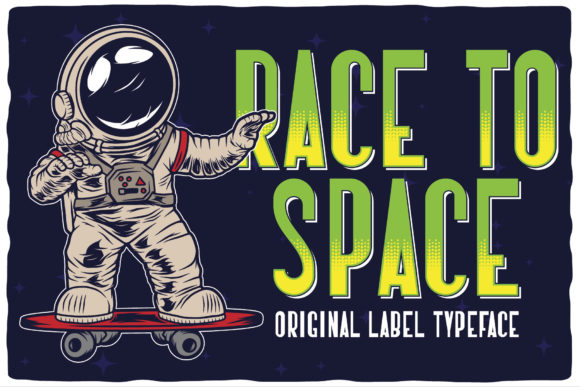
Race to Space is a bold and chunky lettered display font. Its design philosophy revolves around maximum legibility combined with a distinct, almost architectural presence. When added to your creative ideas, this font acts as a visual anchor, ensuring that key messages do not just sit on the screen but leap off it. For professionals, creators, and educators alike, understanding how to leverage such a specific typographic voice is essential for effective communication.
The Architecture of Boldness: Understanding the Design DNA
To appreciate the utility of Race to Space, one must first analyze its physical characteristics. Unlike standard sans-serif fonts that prioritize neutrality, this typeface embraces weight and volume. The letters are constructed with thick strokes and generous spacing, creating a sense of solidity that feels both modern and retro-futuristic. This "chunky" aesthetic is not accidental; it is engineered to reduce visual fatigue while maximizing impact.
The geometry of each character is deliberate. The curves are often flattened or exaggerated to maintain clarity at large sizes, while the straight lines possess a rigidity that suggests stability. When you apply Race to Space to a headline, you are essentially building a structure out of text. This makes it particularly effective for titles, pull quotes, and section headers where the goal is to establish a hierarchy that cannot be ignored.
- Weight and Volume: The heavy stroke width creates a high-contrast environment against lighter body text, guiding the eye naturally.
- Structural Integrity: The chunky nature ensures that even when scaled down or viewed from a distance, the characters remain distinct and readable.
- Modern Nostalgia: The style bridges the gap between 1980s geometric designs and contemporary minimalist trends, offering a timeless appeal.
Strategic Applications Across Industries
The versatility of a font like Race to Space allows it to transcend niche boundaries. While it is inherently a display font, its application varies significantly depending on the industry and the specific problem being solved. Let us explore how different sectors utilize this bold typographic approach to achieve their goals.
Digital Marketing and Brand Identity
For business owners and marketing professionals, the primary challenge is differentiation. In a saturated market, brands often resort to subtle gradients and soft shadows to stand out. However, there is immense power in raw, unapologetic boldness. Using Race to Space for brand logos, banner advertisements, or social media graphics creates an immediate association with strength and confidence.
Consider a scenario where a new energy drink launches. The product needs to convey speed, power, and excitement. A standard Helvetica might feel too corporate, while a handwritten script might feel too casual. Race to Space hits the sweet spot. Its bold, blocky letters mimic the feeling of a rocket launch or a racing car, perfectly aligning with the product's narrative. When incorporated into creative ideas, the font transforms a simple tagline into a rallying cry.
Educational Materials and Research Presentations
Educators and researchers often struggle with presenting complex data in an engaging manner. Dense slides filled with small text can lead to disengagement among students or audience members. By utilizing Race to Space for key concepts, research titles, or statistical highlights, presenters can break up the monotony of information delivery.
The chunky nature of the font aids cognitive processing. The human brain processes high-contrast, large-scale shapes faster than fine details. Therefore, using this font to highlight the core thesis of a paper or the main takeaway of a lecture helps reinforce memory retention. It serves as a visual cue that says, "This is important." When paired with clean, smaller body text, the contrast creates a dynamic reading experience that keeps the audience focused.
Creative Arts and Hobbyist Projects
Hobbyists, from DIY enthusiasts to graphic designers working on personal projects, often seek fonts that offer personality without requiring extensive customization. Race to Space provides an instant stylistic overhaul. Whether designing a poster for a local community event, creating album art for a band, or developing merchandise for a craft business, this font adds a layer of professionalism and intentionality.
The font's robust form works exceptionally well in print media as well. T-shirts, stickers, and signage benefit from the clear outlines and solid fills, ensuring that the message remains legible even under less-than-ideal lighting conditions or when printed on textured surfaces.
Workflow Integration and Implementation Strategies
Integrating Race to Space into a workflow requires more than just selecting it from a dropdown menu. To maximize its effectiveness, designers and content creators should follow specific implementation strategies that respect the font's inherent strengths.
- Establish Contrast Ratios: Because Race to Space is so dominant, it demands space. Do not crowd it with other heavy elements. Pair it with light, airy body text (such as a thin sans-serif) to create a balance between the loud header and the quiet supporting text. This contrast enhances readability and prevents visual overload.
- Control Kerning and Tracking: The wide, chunky letters may require slight adjustments in spacing. Tight tracking can make the text look like a solid block, which can be effective for short slogans but difficult to read for longer phrases. Conversely, loose tracking can emphasize the individual letters, adding a sense of grandeur. Experimentation is key to finding the right rhythm.
- Leverage Color Psychology: The boldness of the font amplifies color. A red headline in Race to Space feels urgent and aggressive, while a blue version feels stable and trustworthy. Use color to modulate the emotional tone of the message delivered by the font.
- Mix with Organic Elements: To avoid a sterile, industrial look, combine the rigid geometry of the font with organic imagery or textures. This juxtaposition creates a sophisticated design that feels both grounded and innovative.
Addressing Common Considerations and Limitations
While Race to Space offers numerous advantages, it is not a universal solution for every typographic need. Understanding its limitations is crucial for maintaining professional standards.
The most significant constraint is its size dependency. As a display font, it is designed for headlines and large formats. Attempting to use it for long-form body copy will result in poor readability and increased eye strain due to the heavy ink coverage and lack of fine detail. It is strictly intended for short bursts of text—titles, captions, buttons, and labels.
Additionally, the bold aesthetic can sometimes overpower delicate content. If the subject matter requires subtlety, nuance, or a whisper-like quality, Race to Space may be too loud. In such cases, it is better reserved for accentuating only the most critical keywords within a softer design context.
Furthermore, accessibility considerations must be kept in mind. While the font is generally highly legible due to its open forms, extremely tight kerning or low-contrast color combinations can hinder users with visual impairments. Always ensure that the background and text colors meet WCAG (Web Content Accessibility Guidelines) standards, regardless of how striking the font appears.
The Future of Bold Typography in Digital Spaces
As web design trends continue to evolve, we are seeing a shift away from the ultra-minimalist, flat design movement toward more expressive and textured interfaces. Users are craving authenticity and personality in their digital experiences. Race to Space sits perfectly at the forefront of this trend.
The font's ability to evoke a sense of motion and progress aligns well with the fast-paced nature of the internet. Whether it is used in a loading animation, a call-to-action button, or a hero section of a website, it communicates forward momentum. For businesses looking to future-proof their brand identity, adopting a font that balances retro charm with modern functionality is a smart strategic move.
Moreover, the rise of mobile-first design has changed how typography is consumed. Large, chunky letters are easier to tap and read on small screens. Race to Space naturally accommodates these constraints, making it an ideal choice for responsive web design where space is at a premium but visibility is critical.
Conclusion: Elevating Your Creative Vision
The journey from a blank canvas to a finished design is paved with countless decisions, and typography is one of the most influential of them all. Race to Space offers a powerful option for those willing to embrace boldness. Its unique combination of chunky weight, clear structure, and dynamic presence makes it an invaluable asset for anyone looking to make a lasting impression.
Whether you are a professional designer refining a client's brand, an educator simplifying complex data, or a hobbyist expressing your creativity, incorporating Race to Space into your toolkit can elevate the quality of your work. By understanding its characteristics, respecting its limitations, and applying it with strategic intent, you can ensure that your creative ideas not only stand out but resonate deeply with your audience. In a world full of noise, let your words speak with the authority and clarity that only a truly bold font can provide.