Why Trees of Happiness Is a Strategic Choice for Modern Design Projects
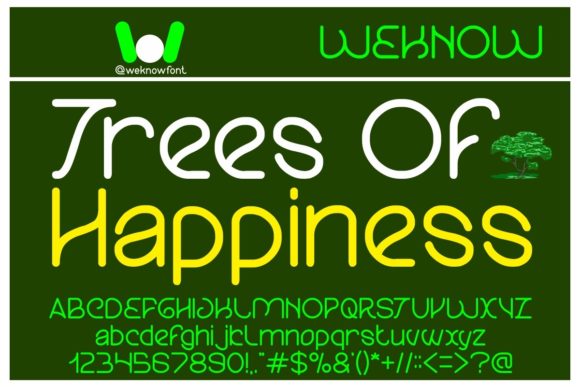
In the crowded landscape of digital and print typography, finding a font that balances distinctiveness with usability is a persistent challenge. Trees of Happiness has emerged as a compelling option for designers seeking an aesthetic that feels both organic and intentionally crafted. Unlike standard serif or sans-serif typefaces that prioritize neutrality, this display font offers a cool, minimalistic, and interesting looking character set that immediately captures attention. Its unique structure appeals to a wide range of crafty ideas, from letterheads and titles to stationery and branding materials.
However, selecting a typeface is rarely about simply liking how it looks on a screen. It requires evaluating how the font functions within a specific context, its legibility across different mediums, and how it compares to other available resources. This analysis explores the specific attributes of Trees of Happiness, examines its place among alternative design tools, and helps professionals decide when this font is the right strategic asset for their projects.
Understanding the Distinctive Character of Trees of Happiness
The primary allure of Trees of Happiness lies in its ability to convey a sense of growth and natural flow while maintaining a clean, modern silhouette. The font's design philosophy appears rooted in the concept of nature meeting structure. The strokes often feature subtle variations in weight and curvature that mimic the irregularity of tree branches or leaves, yet they remain contained within a minimalist framework. This duality allows the text to feel hand-crafted without sacrificing the precision required for professional communication.
What makes Trees of Happiness distinct from traditional display fonts is its restraint. Many fonts in this category lean heavily into ornamentation, using excessive serifs, swashes, or decorative ligatures that can quickly become visually overwhelming. In contrast, this font utilizes negative space effectively. The "cool" factor mentioned in its description stems from this lack of clutter; it does not demand attention through noise but rather through a quiet confidence. For designers working on projects where the message needs to stand out without shouting, this balance is invaluable.
The versatility of the font extends to its application in various formats. Whether used for a bold headline on a website banner or as the primary typeface for a wedding invitation suite, the font adapts well to both large-scale displays and smaller print runs. Its original look ensures that the final output avoids the generic feel that plagues many templates, giving brands and individuals a unique visual identity from the very first glance.
Evaluating Trees of Happiness Against Other Display Options
When researching typography options, professionals often find themselves comparing a new discovery against established categories. To understand where Trees of Happiness fits, it is helpful to compare it with two common alternatives: standard decorative scripts and geometric sans-serifs.
- Standard Decorative Scripts: Traditional script fonts often rely on cursive connections and high-contrast strokes to create elegance. While beautiful, they can sometimes be difficult to read at small sizes or in all-caps formats. Trees of Happiness differs by offering a more structured approach. It retains the organic feel of a script or display font but maintains better readability due to its open forms and consistent spacing.
- Geometric Sans-Serifs: Fonts like Helvetica or Futura are the go-to choices for minimalism. They are clean and efficient but can feel sterile or corporate. If a designer needs to inject personality into a project without resorting to cliché imagery, Trees of Happiness serves as a perfect bridge. It provides the warmth and uniqueness that geometric fonts lack, while still adhering to the principles of simplicity.
This comparison highlights a key decision factor: the need for personality versus neutrality. If the goal is to blend in with modernist standards, a neutral sans-serif might suffice. However, if the project aims to evoke a specific mood—such as creativity, nature, or artisanal quality—Trees of Happiness offers a more targeted solution. It sits comfortably in the middle ground, providing enough character to be memorable without crossing into illegibility.
Strengths, Tradeoffs, and Practical Applications
No single typeface is a universal solution, and understanding the tradeoffs of Trees of Happiness is essential for making an informed choice. Identifying the strengths and limitations early in the design process prevents costly revisions later.
Key Strengths
The most significant advantage of this font is its ability to elevate simple layouts. When applied to letterheads, the unique shape of the letters adds a layer of sophistication that plain text cannot achieve. Similarly, for titles, the font acts as a visual anchor, drawing the eye naturally to the most important information. The "interesting looking" aspect of the font ensures that even static images or printed materials feel dynamic.
Furthermore, its minimalistic nature means it pairs well with complex backgrounds or busy photography. Because the font itself is not overly ornate, it does not compete with other visual elements on the page. This makes it particularly effective for stationery designs, where multiple elements (logos, icons, body text) must coexist harmoniously.
Potential Limitations
Despite its strengths, there are scenarios where Trees of Happiness may not be the optimal choice. As a display font, it is generally less suitable for long-form body copy. Reading paragraphs of text in a highly stylized typeface can cause eye fatigue and reduce comprehension. Designers must be prepared to pair it with a more neutral, highly legible font for extended reading sections.
Additionally, because of its distinctive character, it may clash with brands that require a strictly formal or conservative image. A law firm or a financial institution might find the organic curves too casual for their core messaging. In these cases, the font could undermine the perceived authority of the organization. It is crucial to evaluate the brand voice before committing to this typeface.
Decision Factors: When to Choose Trees of Happiness
Choosing the right typography is ultimately a decision based on context. To help determine if Trees of Happiness is the right resource for your current project, consider the following criteria.
Choose Trees of Happiness if:
- The project prioritizes emotional connection: You are designing for lifestyle brands, wellness products, creative agencies, or personal portfolios where warmth and individuality are paramount.
- You need a focal point: The design relies on strong headlines, cover art, or logo treatments where the typography itself is the main visual element.
- You want to avoid trends: Standard fonts can date quickly. The original look of Trees of Happiness offers a timeless quality that feels fresh without being tied to a fleeting trend.
- Print quality is high: The nuances of the font are best appreciated in high-resolution print, such as premium stationery or packaging, where fine details are preserved.
Consider an alternative if:
- Readability is the absolute priority: If the text will be scanned quickly (like in a manual or legal document), a standard sans-serif is safer.
- The audience is global: Highly stylized fonts can sometimes have cultural connotations that may not translate well internationally. Neutral fonts offer broader accessibility.
- Technical constraints exist: If the font needs to render perfectly on low-resolution screens or in web browsers with limited font support, a system font or a widely supported web font might be more reliable.
Integrating the Font into a Cohesive Strategy
Once you have decided that Trees of Happiness aligns with your goals, the next step is integration. The most successful designs use this font as part of a balanced hierarchy. It should not be the only typeface in the mix unless the content is extremely short. Pairing it with a clean, understated sans-serif creates a sophisticated contrast that enhances the overall impact.
For example, a designer creating a line of eco-friendly products might use Trees of Happiness for the product name and tagline, evoking the natural ingredients, while using a simple geometric sans-serif for the nutritional facts and usage instructions. This approach leverages the distinctiveness of the display font while ensuring functional clarity.
Similarly, in digital marketing, using this font for email subject lines or social media headers can significantly increase engagement rates by breaking the monotony of standard block text. The "cool" factor helps the content stand out in a user's feed, encouraging them to pause and interact.
Making the Final Selection
The journey to selecting the perfect font involves research, testing, and a clear understanding of the project's objectives. Trees of Happiness stands out as a versatile tool for designers who value originality and minimalism. Its ability to convey a sense of happiness and growth through simple shapes makes it a powerful asset for a wide array of creative endeavors.
While it is not a one-size-fits-all solution, its specific strengths make it an excellent candidate for projects requiring a touch of artisanal charm. By carefully weighing its benefits against potential limitations and comparing it to other available options, designers can make confident decisions that enhance their work. Whether for a personal stationery line or a corporate rebrand, Trees of Happiness offers a unique opportunity to communicate with style and substance.