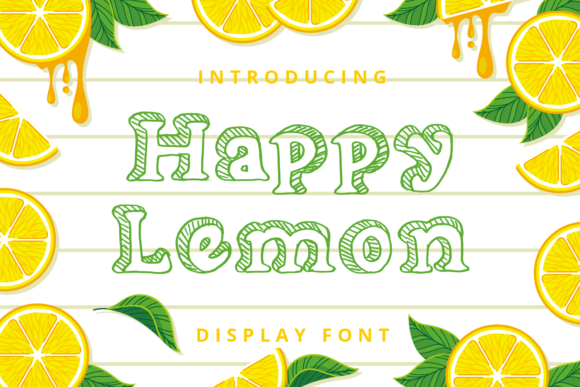
Happy Lemon: The Playful Display Font for Authentic Branding
Designers often struggle to find a typeface that balances genuine fun with professional polish. You need something that grabs attention without looking cheap or childish. This is where Happy Lemon steps in as a standout choice. It is a cute and cartoon-like display font that embodies playfulness and authenticity. Unlike generic scripts that can feel messy or overused, this creative font offers a structured yet whimsical personality perfect for children-themed designs, especially when combined with bright colors.
The visual characteristics of Happy Lemon are distinct. The letterforms feature rounded edges and soft curves that mimic the shape of fruit or hand-drawn doodles. This gives the text a tactile quality, making it feel approachable and inviting. It avoids the harsh angles of many modern sans serif fonts while retaining enough structure to remain legible at various sizes. When you place this font on a screen or paper, it immediately signals a tone of joy and creativity. It is not just a set of letters; it is a design asset that sets the mood for your entire project.
Where Happy Lemon Shines in Real-World Projects
Understanding where to apply a specific typeface is crucial for maintaining brand consistency. Happy Lemon is versatile enough to work across several mediums, from digital interfaces to physical packaging. Its primary strength lies in areas requiring immediate emotional connection.
- Packaging Design: For food products, toys, or craft supplies, Happy Lemon adds an instant layer of appeal. The playful nature of the font suggests freshness and fun, which resonates well with families and gift buyers.
- Social Media Graphics: In a feed dominated by stark minimalism, a post featuring Happy Lemon stands out. It breaks the visual monotony and encourages users to stop scrolling. It works exceptionally well for event invitations, sale announcements, or behind-the-scenes content for lifestyle brands.
- Editorial Design: While not ideal for long-form body text, it excels in headlines, pull quotes, and chapter titles within magazines or blogs focused on parenting, hobbies, or lifestyle.
- Logo Design: Small businesses aiming for a friendly, accessible image can use this font to create a memorable logo. It humanizes a brand, making large corporations feel more like a neighborly shop.
The font's ability to convey authenticity is its most valuable trait. Consumers today are skeptical of overly polished marketing. They want brands that feel real. Happy Lemon delivers this by introducing slight imperfections and organic shapes that mimic human handwriting, yet it remains clean enough to be read easily. This balance prevents the design from looking amateurish while still feeling personal.
Influencing Brand Perception and Audience Engagement
Typeface selection is rarely just about aesthetics; it is a strategic decision that influences how an audience perceives a message. When you choose Happy Lemon, you are signaling that your brand values joy, creativity, and inclusivity. This psychological cue can significantly boost engagement rates among target demographics who appreciate warmth over cold efficiency.
For designers working on brand identity, consistency is key. Using Happy Lemon across different touchpoints—from a website header to a product label—creates a cohesive narrative. However, readability must always be prioritized. Because it is a display font, it should not be used for paragraphs of text. Instead, use it to establish visual hierarchy. Let it lead the eye to the most important information, such as a call-to-action button or a headline. By contrasting it with a neutral sans serif font for body copy, you ensure that the design remains professional and easy to navigate.
This contrast also enhances recognition. A unique font becomes part of a brand's visual signature. Just as a specific color palette can make a brand instantly recognizable, a distinctive display font like Happy Lemon can anchor a brand's identity in the minds of consumers. When paired correctly, it reinforces the message rather than distracting from it.
Practical Guidance for Choosing and Pairing Fonts
If you are considering adding Happy Lemon to your toolkit, there are several practical factors to evaluate before purchasing or downloading. First, review the included styles. A premium font package should offer a variety of weights and possibly alternate characters to give you flexibility. Check if it includes ligatures or special punctuation that enhance the flow of text.
Evaluating Project Fit
Before integrating the font, ask yourself if it aligns with the project's goals. If you are designing a legal document or a financial report, Happy Lemon would likely undermine the seriousness required. However, for a bakery menu, a children's book cover, or a summer camp flyer, it is an ideal match. Consider the context: does the font support the story you are trying to tell?
Font Pairing Strategies
One of the most common mistakes designers make is using too many decorative fonts. Happy Lemon is loud and expressive, so it needs a quiet partner. A simple sans serif font or a clean serif font works best for body text. The goal is to let Happy Lemon be the star while the supporting typeface ensures clarity. Test your pairings by creating mockups. Read the text aloud to see if the rhythm feels right. If the combination feels chaotic, try adjusting the size, weight, or spacing.
Readability and Commercial Licensing
p>Even the cutest font must be readable. Ensure that the x-height is sufficient and that the letters do not merge together at smaller sizes. Always test your design on mobile devices, as screen rendering can change the appearance of display fonts. Finally, verify the commercial license. If you plan to use the font for client work, merchandise, or mass production, ensure the license covers these activities. Many free fonts have restrictions that can lead to legal issues later. Investing in a proper commercial font license protects your business and supports the type designer.Ultimately, Happy Lemon is more than just a collection of glyphs. It is a tool for storytelling. Whether you are a blogger looking to spice up your newsletter, a small business owner wanting to stand out on the shelf, or a graphic designer seeking a new favorite asset, this font offers a reliable way to inject personality into your work. By understanding its strengths and limitations, you can leverage its charm to create designs that are not only visually appealing but also effective in connecting with your audience.