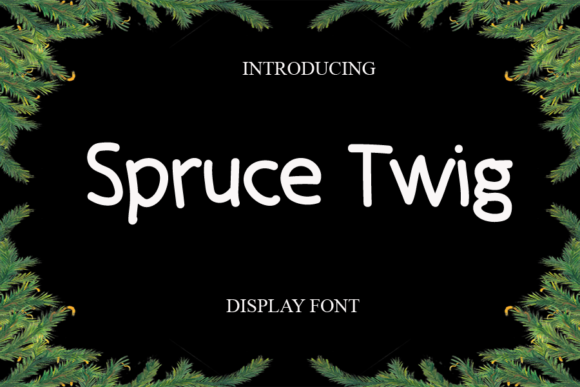
Spruce Twig: Integrating a Playful Display Font into Professional Workflows
In the realm of digital design and content creation, typography is rarely just about readability; it is a strategic decision that dictates the tone, hierarchy, and emotional resonance of a project. While many designers default to safe, neutral sans-serifs for body text, the true differentiation often happens in the headlines and display elements. This is where Spruce Twig enters the conversation as a distinct asset. It is a cool and childish display font that brings a unique texture to visual communications, yet its utility extends far beyond simple decoration.
For professionals ranging from marketers to educators, integrating a typeface like Spruce Twig requires more than just selecting it from a menu. It demands an understanding of how it fits into a broader creative process. When used correctly, this font has the potential to elevate any creation by injecting personality without sacrificing structural integrity. The following guide explores how to implement Spruce Twig effectively within your existing workflows, ensuring that every project benefits from its distinctive character.
Understanding the Role of Spruce Twig in Design Systems
Before diving into implementation, it is crucial to define what Spruce Twig actually brings to the table. As a display font with a "cool and childish" aesthetic, it mimics the organic irregularities of hand-drawn lettering while maintaining a modern edge. Unlike standard serif or geometric fonts that strive for invisibility, Spruce Twig is meant to be seen. It acts as a visual anchor that draws the eye immediately.
In a professional context, this font serves as a powerful tool for brand differentiation. If you are building a personal brand, launching a product line, or creating educational materials, consistency is key. Spruce Twig can become a signature element of your visual identity. However, its strength lies in its contrast. Because it is so distinct, it must be paired strategically with simpler, more neutral typefaces to ensure legibility and balance. The goal is not to let the font dominate every inch of the page, but to use it as a deliberate highlight that guides the user's attention through the content.
Pre-Project Planning and Asset Organization
The integration of Spruce Twig begins long before the first pixel is placed on a canvas. Effective workflow management involves preparing your assets and establishing guidelines early in the planning phase. For freelancers and small business owners, this means adding Spruce Twig to your master style guide or template library. By doing so, you eliminate the cognitive load of deciding on typography during the execution phase.
Consider the preparation steps required for a new campaign or blog series:
- Asset Auditing: Ensure you have the correct file formats (OTF, TTF, WOFF) available. Check licensing terms to confirm usage rights across web, print, and commercial applications.
- Pairing Strategy: Identify complementary fonts. Since Spruce Twig is busy and textured, pair it with clean sans-serifs like Helvetica, Arial, or Inter for body copy. This creates a clear visual hierarchy where the headline captures attention and the body text delivers information efficiently.
- Context Definition: Determine which projects truly benefit from a "childish" or playful tone. Spruce Twig might be perfect for a children's book cover or a fun marketing email, but less suitable for a formal financial report. Defining these boundaries early prevents misuse.
By organizing your resources around Spruce Twig beforehand, you streamline the production process. You move from a state of uncertainty to a state of readiness, allowing you to focus on the core message rather than technical details.
Implementation Across Creative and Business Workflows
Once the groundwork is laid, the actual implementation of Spruce Twig varies depending on the medium and the specific goals of the task. Whether you are a marketer crafting a social media strategy or an educator designing learning materials, the font interacts differently with the audience and the platform.
Digital Marketing and Content Creation
For bloggers and content creators, Spruce Twig offers a way to break the monotony of standard web typography. In a sea of corporate blue and grey, a headline set in Spruce Twig can increase click-through rates by signaling approachability and creativity. However, usability remains paramount. When implementing this font on a website, pay close attention to font weight and size. Display fonts can sometimes lose detail at smaller sizes, so reserve Spruce Twig for large headings, pull quotes, or call-to-action buttons.
Furthermore, consider the accessibility implications. While Spruce Twig is engaging, ensure that the contrast between the text and the background is sufficient for all users. Tools like color contrast checkers should be part of your quality control process. If the font is too decorative, it may hinder readability for those with visual impairments. In such cases, using Spruce Twig for the title only, while switching to a highly legible font for the article text, is the optimal solution.
Educational Materials and Workshops
Educators and trainers often struggle to make complex topics feel accessible. Spruce Twig's inherent playfulness makes it an excellent choice for instructional design. When creating slide decks, handouts, or course titles, this font can reduce the perceived difficulty of the material. It signals to the learner that the environment is safe for experimentation and exploration.
In a workshop setting, using Spruce Twig for agenda items or section headers can help segment information visually. This aids in cognitive processing, allowing participants to quickly scan the structure of the session. The key here is consistency. If you decide to use Spruce Twig for the main headers, apply it consistently throughout the entire deck. Inconsistent typography creates visual noise that distracts from the learning objectives.
Branding and Small Business Identity
Entrepreneurs and small business owners often look for ways to humanize their brands. Spruce Twig can bridge the gap between a polished corporate image and a friendly neighborhood vibe. Imagine a local bakery, a craft supply store, or a boutique agency using this font on signage, packaging, and social media avatars. The font communicates warmth and authenticity, qualities that resonate deeply with modern consumers.
When building a brand identity, think about the longevity of the font choice. Trends come and go, but a well-executed "childish" aesthetic can remain timeless if grounded in solid design principles. Ensure that Spruce Twig works well in black and white, as logos often need to be reproduced in monochrome for embossing, stamps, or faxed documents. Test the font at various scales to ensure the details do not disappear when shrunk down for favicons or mobile app icons.
Quality Control and Long-Term Maintenance
Integrating a unique font like Spruce Twig is not a one-time event; it requires ongoing maintenance and quality control to ensure it continues to serve your goals effectively. As your projects evolve, so too will the contexts in which you use the font. Regular audits of your design assets can reveal whether Spruce Twig is still the right choice for your current direction.
One critical aspect of maintenance is version control. Fonts are frequently updated by their creators to fix bugs or improve rendering. Always keep your libraries up to date to avoid compatibility issues across different software platforms. Additionally, monitor how the font renders on different devices. A font that looks crisp on a high-resolution desktop monitor might appear jagged on older tablets or smartphones if the web font optimization is poor.
Consistency is the hallmark of professional work. If you are working in a team, establish clear documentation on how Spruce Twig should be used. Define rules regarding kerning, leading, and capitalization. For instance, some display fonts look best in all caps, while others require mixed case to maintain their character. Without these guidelines, team members might apply the font inconsistently, diluting the impact of the design.
Collaboration and Feedback Loops
When collaborating with clients or stakeholders, Spruce Twig can sometimes spark debate. Its strong personality is not always universally liked. To navigate this, present the font within the context of the overall brand strategy. Explain how the "cool and childish" nature of the font aligns with the target audience's expectations. Use mockups to demonstrate the font in action, showing how it elevates the creation compared to a generic alternative.
Feedback loops are essential for refining the use of the font. After a campaign launches or a document is distributed, gather data on engagement and user feedback. Did the font capture attention? Was it easy to read? These insights inform future decisions. If the font proves too distracting in certain contexts, adjust the application strategy. Perhaps it needs to be used sparingly, acting as a subtle accent rather than a primary headline.
Maximizing the Potential of Your Typography Library
Ultimately, Spruce Twig is more than just a file in your font folder; it is a versatile tool that, when wielded with intention, can transform ordinary projects into memorable experiences. Whether you are a freelancer looking to stand out in a crowded marketplace or an educator aiming to inspire students, the inclusion of this font adds a layer of depth to your work.
The secret to success lies in the balance. Use Spruce Twig to inject life and character, but support it with robust structural choices in layout and pairing. By treating typography as a strategic component of your workflow rather than an afterthought, you ensure that every piece of content you produce is cohesive, effective, and impactful. As you continue to build your library, remember that the best fonts are not just those that look good, but those that facilitate communication and achieve specific goals. Spruce Twig, with its unique charm, is certainly an incredibly asset to any collection ready to meet these challenges.